

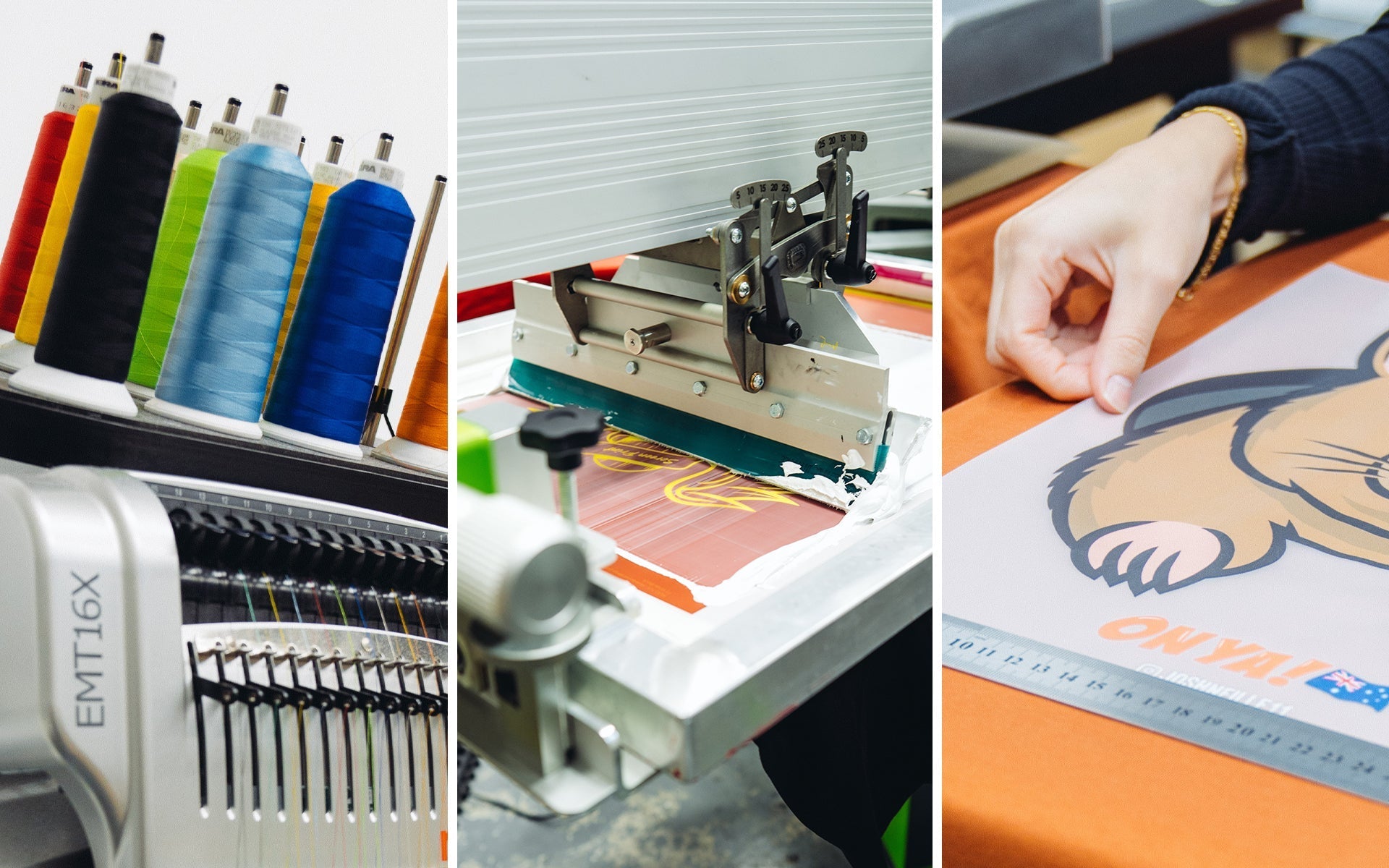
What's the Best Way to Brand Your Workwear: Screen Printing, Embroidery or DTF?
If you're ordering branded workwear for your team, one of the first decisions you'll need to make is how your logo will be applied to the garments.
For many businesses, the choice isn't as straightforward as it seems. Embroidery, screen printing and DTF (Direct to Film) printing all have their strengths, and the best option often depends on the type of workwear you're ordering, how the garments will be used, and what your logo looks like.
At The Colour Cartel, we work with a wide range of businesses, from electricians and plumbers through to landscapers, builders, mechanics, hospitality venues and office teams. One thing we've learned is that there isn't a single "best" printing method for every situation.
In this guide, we'll break down the most common workwear branding methods, where they work best, and how to choose the right option for your team.
What Should You Consider Before Choosing a Printing Method?
Before comparing decoration methods, it's worth taking a step back and looking at the bigger picture.
The right choice depends on several factors, including:
- The type of garments you're ordering
- The fabric the garments are made from
- How detailed your logo is
- How often the garments will be worn and washed
- Your order quantity
- The look you're trying to achieve
For example, a simple one-colour logo on a high-vis cotton t-shirt may be perfectly suited to screen printing, while a detailed multi-colour logo on a corporate polo might be better suited to embroidery or DTF.
The environment your team works in also matters. Garments that are exposed to dirt, sun, tools and daily wear often have different requirements to uniforms worn in retail, hospitality or office environments.
Embroidery: The Traditional Workwear Favourite
Embroidery involves stitching your logo directly into the garment using coloured threads.
It's one of the most popular decoration methods for workwear and uniforms because it offers a professional appearance and excellent durability.
Best For
- Polo shirts
- Work shirts
- Jackets
- Vests
- Caps
- Corporate uniforms
Why Businesses Choose Embroidery
Embroidery has a premium feel that many businesses associate with professionalism and quality. A stitched logo can elevate the appearance of a uniform and help create a polished, established look.
It's also incredibly durable. Because the design is sewn directly into the garment, it can withstand years of regular wear and washing when properly cared for.
This makes it particularly popular with trade businesses, service companies and customer-facing teams.
Things to Consider
Embroidery isn't always the perfect solution.
Very small text can become difficult to read, and highly detailed logos may need to be simplified before stitching. Thread has physical limitations, so certain fine details that look great on a screen don't always translate well into embroidery.
It's also generally not the most practical choice for large back logos. Large embroidered designs can become heavy, stiff and expensive compared to printed alternatives. You may also find that large designs may appear to pucker or warp the garment, due to their rigid structure.
A Common Workwear Setup
One of the most popular workwear combinations we produce is a left chest embroidered logo on polos, work shirts and jackets. It creates a professional look while standing up to everyday wear.
Screen Printing: Great for Visibility and Value
Screen printing has been used in the apparel industry for decades and remains one of the most reliable decoration methods available.
The process involves pushing ink through a mesh screen directly onto the garment, creating a durable printed design.
Best For
- High-vis t-shirts
- Cotton workwear
- Team uniforms
- Large back logos
- Bulk orders
Why Businesses Choose Screen Printing
Screen printing excels when you need bold, highly visible branding.
For trade businesses, this is especially useful for large logos on the back of garments. Whether your team is working on a construction site, in a warehouse or out on the road, a clear back print helps increase brand visibility.
Screen printing also becomes very cost-effective as quantities increase. Once the screens have been created, producing larger runs becomes more economical than many other decoration methods.
The result is a vibrant, durable print that can withstand regular use when applied correctly.
Things to Consider
Screen printing works best with simpler artwork and larger quantities.
Because screens need to be created before production begins, setup costs apply. This means it may not always be the most economical option for very small orders.
The number of colours in your logo can also influence costs, as each colour typically requires its own screen.
A Common Workwear Setup
Many trade businesses choose a combination of embroidery and screen printing.
For example:
- Embroidered logo on the left chest
- Large screen printed logo on the back
This approach provides a professional appearance from the front while maximising visibility from the back.
DTF Printing: Flexible, Detailed and Ideal for Smaller Runs
DTF (Direct to Film) printing has become increasingly popular in recent years and fills a gap that traditional methods don't always cover.
The process involves printing a design onto a specialised film before transferring it onto the garment using heat and pressure.
Best For
- Small orders
- Multi-colour logos
- Designs with gradients
- Detailed artwork
- Businesses needing flexibility
Why Businesses Choose DTF
One of the biggest advantages of DTF is its ability to reproduce highly detailed artwork.
If your logo contains gradients, fine lines, small text or multiple colours, DTF can often capture those details more accurately than embroidery and more economically than screen printing for smaller quantities.
It's also a great option for businesses ordering lower volumes.
Whether you need five shirts or fifty, DTF can provide a practical solution without some of the setup requirements associated with screen printing.
Things to Consider
While DTF is highly versatile, it creates a different finish to embroidery.
Some businesses prefer the textured, premium feel of stitching, particularly for customer-facing uniforms.
DTF transfers are durable, but for garments subjected to years of heavy-duty wear and harsh working conditions, embroidery often remains the benchmark for longevity.
When DTF Makes Sense
DTF is often a great fit for:
- New businesses ordering smaller quantities
- Teams needing multiple logo colours
- Promotional workwear
- Businesses wanting flexibility without large minimum orders
Which Printing Method Is Best for Trade Workwear?
This is the question we get asked most often.
The answer is that different garments often benefit from different decoration methods.
For many trade businesses, a combination approach delivers the best result.
Polo Shirts and Work Shirts
Embroidery is often the preferred option because it creates a professional appearance and holds up well over time.
High-Vis T-Shirts
Screen printing is a popular choice, particularly for larger back logos where visibility is important.
Jackets and Outerwear
Embroidery generally provides the most premium and durable finish.
Small Team Orders
DTF can be an excellent option when quantities are lower or artwork is particularly detailed.
Rather than asking which method is universally "best", it's often more useful to ask which method is best for the specific garment and application.
Common Mistakes We See When Ordering Workwear
Choosing Based on Price Alone
It's natural to compare costs, but the cheapest option isn't always the most cost-effective long-term.
Durability, appearance and garment suitability should all be considered alongside price.
Ignoring Logo Detail
Not every logo works equally well across every decoration method.
Small text, fine lines and complex details may need adjustments depending on how the design will be applied.
Using the Same Method Across Every Garment
Different garments behave differently.
What works perfectly on a cotton t-shirt may not be the ideal solution for a softshell jacket or heavyweight work shirt.
Thinking Only About the Front Logo
Front logos are important, but many businesses overlook the impact of a large, visible back logo.
For trades and service businesses especially, the back of a garment is often where your branding gets the most exposure.
So, What's the Best Printing Method for Workwear?
If you're looking for a quick summary:
- Choose embroidery for a professional, premium and highly durable finish.
- Choose screen printing for bold branding, larger logos and bulk orders.
- Choose DTF for detailed artwork, smaller quantities and maximum flexibility.
The reality is that many of the best workwear setups combine multiple decoration methods to get the most out of each garment.
That's why we usually recommend looking at the garment, logo and intended use before deciding on a production method.
A little planning upfront often leads to workwear that looks better, lasts longer and does a better job representing your business.
Need Help Choosing?
Not sure which method is right for your team?
Whether you're ordering high-vis gear for a trade crew, uniforms for a service business or branded apparel for a growing company, we can help you choose the right garments and decoration methods for your needs.
Get in touch via our customer service, and we'll help point you in the right direction.


